Post Falls, ID · Garage Door Service
Garage Door Maintenance in Post Falls
Garage door maintenance for Post Falls homes built 1950-2003, where cold winters and aging hardware wear springs, rollers, and openers faster than owners expect.
- Repairs & new doors
- Springs & openers
- Serving 5 nearby communities
What You Pay
We don't have a flat maintenance price to quote you here, because what a door needs depends on its age and how it's been running - a 1990s door with original rollers takes more time on a bench than a ten-year-old opener that just needs lubrication and a track check. What we can tell you is how we price the visit once we're in your garage: we look at the spring wind, the cable condition, the track alignment, and the opener's force settings, then tell you plainly what's worn and what's fine. If a part doesn't need replacing, we say so. A maintenance call isn't a sales call for a new door.
Most of the houses we service went up between 1950 and 2003, with a lot of that stock dating to the 1980s and 90s across the six areas we cover. That spread matters for pricing because a door from 1985 and a door from 2001 can have completely different hardware - different spring gauges, different roller types, different opener drive systems. We price the work in front of us, not a one-size number that ignores what's actually on your garage.
How It Shows Up
Maintenance neglect doesn't usually announce itself. It shows up as a door that's gotten a little louder every month, or an opener that strains for an extra second before the door moves. You'll notice the door isn't quite level when it closes, or one side drops faster than the other - a sign the torsion spring has lost tension unevenly. Rollers that have gone dry grind instead of roll, and you can often hear it before you see it: a rhythmic squeak or a metallic scrape as the door travels the track.
In a lot of the houses we see - stock from the 1980s and 90s especially - the first real symptom is the door hesitating partway up, like the opener is working harder than it should. That's usually a spring that's never been adjusted since the house was built, carrying decades of cycles it was never serviced for. Left alone, it doesn't stay a noise problem. It becomes a cable problem, then a track problem, because everything on that door is fighting the one part that's out of balance.
What Causes It Around Here
Cold is the main driver of wear here, and it's a severe cold climate band, not a mild one. Steel contracts in low temperatures, and so does the lubricant on rollers and hinges - grease that moves fine in July turns stiff in January, which means the opener and springs are working against more resistance exactly when the door gets used the most. That extra strain on cold mornings is what ages torsion springs faster than their rated cycle count suggests.
Add to that the age of the housing: doors and hardware installed anywhere from 1950 through 2003, median around 1995, means a lot of garages are running original springs and rollers that have never been touched since installation. A spring rated for a certain number of cycles doesn't know it's 2024 - it just keeps winding and unwinding until it's done, and cold-weather strain burns through that rating quicker than a moderate climate would. We see this pattern across the service area, not just in older sections, because even 1990s-era doors are now old enough that factory lubrication and factory-tensioned springs are past due for attention.
What the Repair Takes
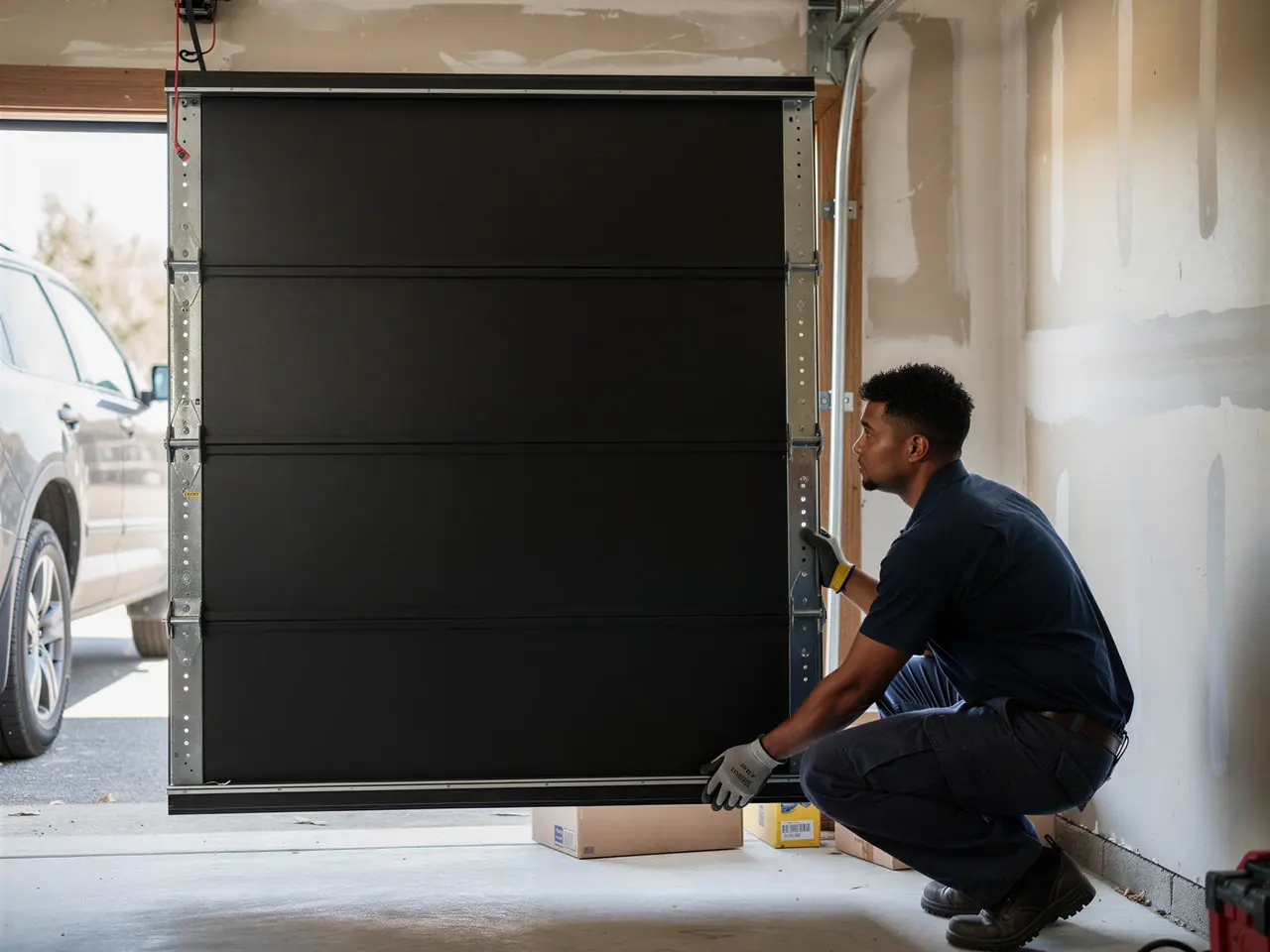
A standard maintenance visit covers the spring tension, the track alignment, the roller and hinge condition, cable wear, and the opener's force and limit settings. On a door that's never been serviced, that's usually an hour or so of actual work - not because the job is complicated, but because checking each point properly takes time, and rushing a spring adjustment is how people get hurt.
If we find a roller that's cracked or a cable that's frayed, we'll tell you before we replace anything, and we'll explain why it can't wait. One honest limit: if a door's spring system is original to a house built in the 1950s or 60s, parts for that exact hardware aren't always sitting on the shelf, and sourcing them can push a repair out a few days. In that case we'll tell you straight whether it's worth the wait or whether a modern replacement spring, sized to match, gets you back up and running faster.
Frequently asked questions
How often should I get my garage door serviced in Post Falls?
With winters this cold, once a year is the minimum, ideally before the first hard freeze. Cold makes lubricant stiffen and springs work harder, so a fall check catches wear before it turns into a stuck door on a January morning.
My door is from the 1990s and has never been serviced - is that a problem?
It's common in this area, since a lot of the housing stock dates to the 1980s and 90s, but an unserviced spring or roller set carries decades of cycles with no adjustment. It's not an emergency by itself, but it's worth checking before it becomes one.
Do you service homes outside Post Falls proper?
We cover the surrounding area, including Rathdrum, Hayden, Dalton Gardens, Spirit Lake, Athol, and Harrison. Each of those has its own page with details specific to that town.
Can I just lubricate the door myself instead of calling?
Lubrication helps, but it doesn't catch a spring that's lost tension or a cable that's starting to fray. A full check covers the parts that actually fail, not just the ones that make noise.
By Neighborhood
Maintenance across the Post Falls area
We also handle maintenance in these Post Falls-area suburbs.
Book garage door service in Post Falls
Call now or request a quote - tell us what the door is doing and where you are.