Post Falls, ID · Garage Door Service
How Post Falls Weather and Older Housing Stock Wear Out Garage Doors
Post Falls homes built 1950-2003 face severe cold winters that stress garage door springs, openers, and tracks harder than newer, better-insulated builds do.
- Repairs & new doors
- Springs & openers
- Serving 5 nearby communities
What Local Conditions Do
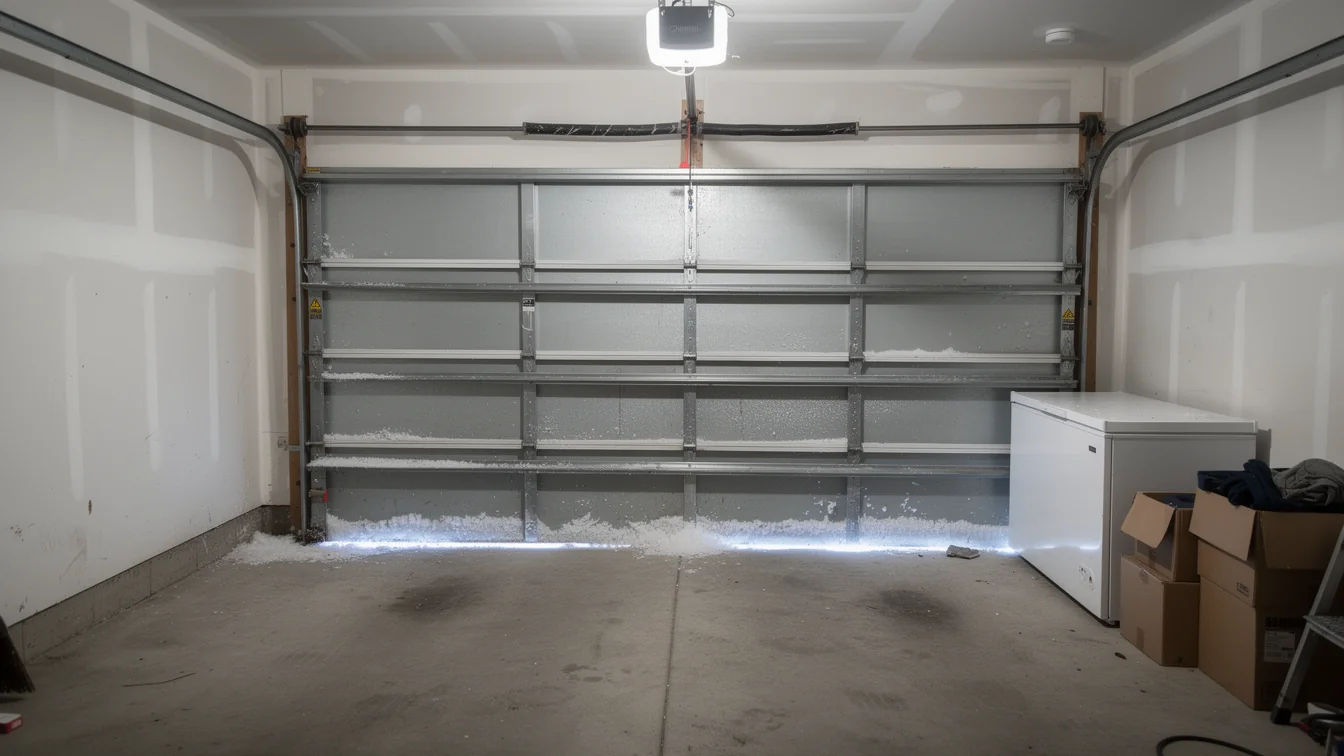
Post Falls falls into a climate band classified as severe cold, which means the ground freezes hard and stays that way for stretches, and freeze-thaw repeats through the season instead of settling into one long cold snap. That matters more here than it would in a mild climate because most of the housing stock in this area went up between 1950 and 2003, with the median home dating to 1995. Doors, springs, and track hardware from that build window were sized and installed under older code assumptions, not the tighter standards you'd see on new construction today. Across the six established areas we work in, most homes cluster in the 1980s and 90s, so you've got a lot of doors the same age, aging the same way, at the same time. We cover Post Falls and the near towns - Rathdrum five miles out, Hayden at seven, Dalton Gardens at eight, with Spirit Lake, Athol, and Harrison further out at 17 to 19 miles. The housing age pattern and the cold both shape what actually breaks and when, which is the point of this page rather than generic door advice.
Season by Season
Cold months are when steel torsion springs lose a little tension and lubricant on rollers and hinges thickens up, so a door that ran smooth in October starts groaning or hesitating by January. Repeated freeze-thaw cycles work on anything with moving metal parts and anything bolted to a concrete slab that's expanding and contracting underneath it - track brackets loosen, bottom seals compress and crack, and photo-eye sensors can drift out of alignment as the slab shifts slightly season to season. None of that is dramatic on its own, but it adds up differently on a door that's already 20 or 30 years old than on one installed last year. Warmer months bring their own smaller issues - wood trim swelling, panels that were fine all winter suddenly binding - but the severe cold band this area sits in is the bigger driver of wear over the life of a door. We don't see the same pattern of complaints in climates that don't get hard freezes, which is exactly why a maintenance schedule built for a mild-winter region doesn't fit a severe-cold one.
What Is Going On
With a median build year of 1995 across this service area, a large share of the doors we get called on are 25 to 40 years into their working life. Torsion springs are rated for a number of open-close cycles, not a number of years, and a spring installed when a house was built in the 1980s or 90s is well past due by now even if it hasn't broken yet. Openers from that era often lack the safety reversal sensors and rolling-code security that became standard later, and when one of those units fails, finding an exact replacement part isn't always possible - we're straightforward about that upfront rather than stringing someone along on a part that got discontinued years ago. Steel sectional doors from the 1980s-90s stock also tend to run on narrower track than current models, which limits what insulation retrofits or opener upgrades are actually compatible. None of this is a crisis if you know it's coming. It mostly means a door's age tells you more about what's likely to fail next than how it looks from the driveway.
Where People Go Wrong
With a median household income of $80,954 across the area and a mix of roughly 7,960 owner-occupied houses among 11,866 households, a lot of homeowners here are in a position to either fix a door properly or put off the decision for a year or two - and the second choice usually costs more. The common mistake is treating a noisy or slow-closing door as cosmetic rather than reading it as a hardware age issue tied to a house built decades ago. People also try to match a new opener to an old track system without checking compatibility, which leads to a callback. Our honest limitation: if your opener predates the early 1990s, we often can't source an exact replacement part, and in that case repair isn't worth the labor - replacement is the straighter path, and we'll tell you that rather than charging for a patch that won't hold. The other common error is skipping spring tension checks because the door
Frequently asked questions
Why does my garage door act up more in winter here than it did when the house was newer?
Cold winters in this area put repeated freeze-thaw stress on track brackets, springs, and slab-mounted hardware. A door installed when your house was built in the 1980s or 90s has had decades of that cycle working on it, so winter symptoms show up sooner than they would on a newer installation.
Is it worth repairing an opener from the 1990s?
Sometimes, but parts for openers that old aren't always available anymore. If we can't source what your unit needs, replacing it is usually the better call rather than paying for a repair that won't hold or match current safety standards.
Do you work outside Post Falls itself?
Yes. We cover the surrounding area including Rathdrum, Hayden, Dalton Gardens, Spirit Lake, Athol, and Harrison, ranging from about 5 to 19 miles out from Post Falls.
How do I know if my door's problem is age-related or something else?
If your home was built between 1950 and 2003 - which covers most houses in this area - and the door is original or close to it, age and cold-cycle wear on springs and track hardware are the most likely cause. A quick inspection tells you which.
Related garage door services in Post Falls
More garage door guides
Book garage door service in Post Falls
Call now or request a quote - tell us what the door is doing and where you are.