Post Falls, ID · Garage Door Service
What Winter Does to Garage Door Openers in Post Falls
Post Falls winters bring sustained power outages and cold that strain garage door openers built for mild climates; here's what local homeowners should check.
- Repairs & new doors
- Springs & openers
- Serving 5 nearby communities
What Local Conditions Do
Post Falls sits in a climate band the federal data marks cold-severe, which means the ground freezes, lines ice up, and the grid takes hits that other parts of the country rarely see. That matters for garage doors because the opener is the one piece of the system wired straight into house power with no manual backup unless someone added one later.
Most of the housing stock here went up between 1950 and 2003, with the median build year landing around 1995, and the bulk of it falls into six named areas built mostly through the 1980s and 90s. That's an important detail: openers from that era were wired for grid power only. Battery backup units weren't standard equipment on a residential garage door opener until years after most of these houses were framed. So when a cold front knocks out power, a huge share of doors in this town simply will not open or close with the push of a button, because they were never built to.
The corridor running from Rathdrum five miles out to Harrison nineteen miles east is almost entirely this same build era, which tells you the problem isn't isolated to one subdivision. It's baked into the housing stock across the whole service area.
Season by Season
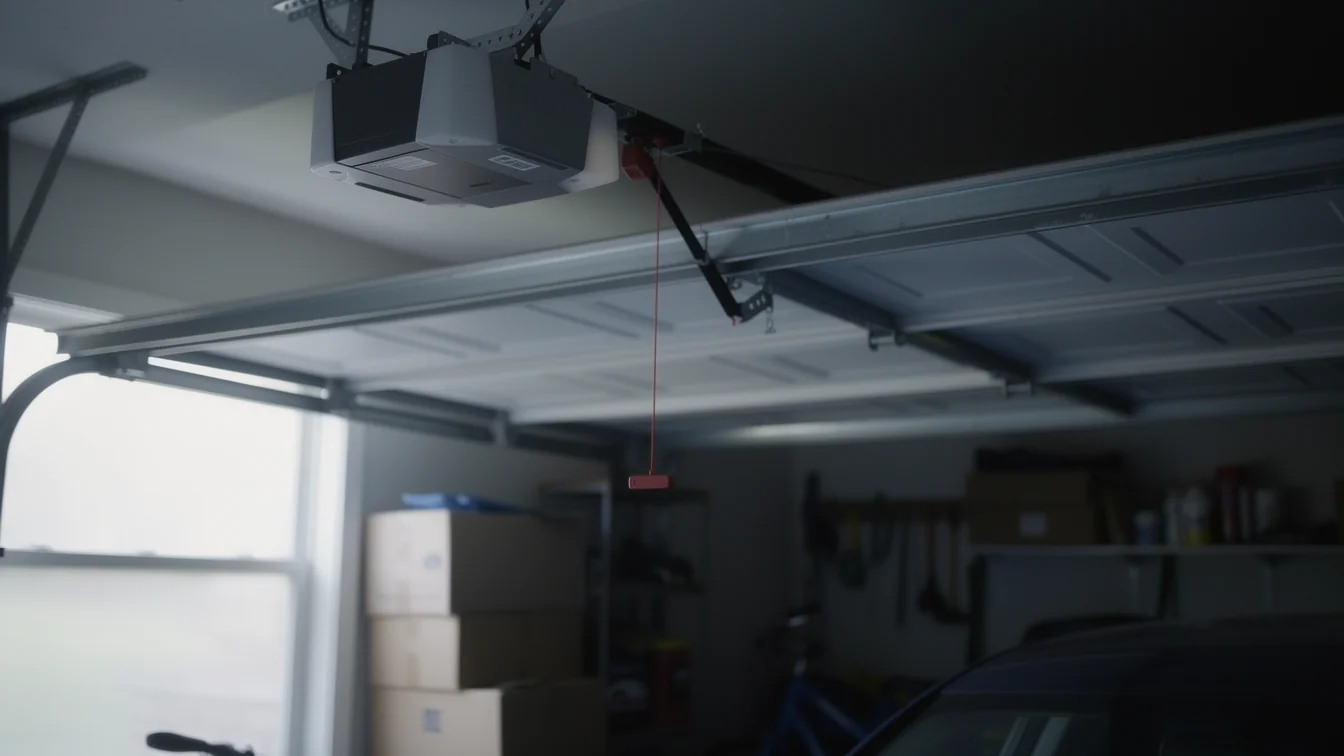
Winter is when this shows up. Cold-severe conditions bring the kind of ice loading that snaps lines and trips breakers, and that's exactly when a homeowner discovers their opener has no battery backup and the manual release cord is the only way in or out. A chain-drive opener from the 1980s or 90s era also draws hard on startup, which is the first thing to struggle when a generator or a weak circuit is all that's available.
Shoulder seasons bring their own issue: freeze-thaw cycles swell and shrink the slab under the track, which can throw alignment on a door that's been sitting on the same hardware for decades given that median 1995 build year.
Summer is the quiet season for this problem. Power holds, temperatures don't stress the steel, and most of the calls we get in warmer months are springs and rollers wearing out on schedule rather than anything tied to the grid. If there's a time of year to get an opener checked before it fails on you, it's before the first hard freeze, not after.
What Is Going On
The short version: a lot of openers in Post Falls are original or close to original equipment sitting on houses built in that 1950-2003 window, concentrated in the 1980s-90s stretch. Those units were designed around grid power being reliable. They don't have a battery backup circuit built in, and retrofitting one means replacing the logic board or the whole unit, not just adding a part.
When a cold-severe weather event knocks out power, the opener goes dead. The door itself is still mechanically fine, it's just that nothing is telling the motor to move, and on older chain-drive units even a small generator can struggle with the startup draw. People sometimes assume this means the opener is broken. Usually it isn't. It's just doing exactly what it was built to do in 1992, which didn't include staying alive through a blackout.
We don't carry a fix for every opener board on the market, and some units from this era are old enough that parts aren't stocked anymore. At that point replacement makes more sense than chasing a part that might take weeks to source.
Where People Go Wrong
The most common mistake is assuming the manual release cord solves the power problem on its own. It disconnects the opener from the door, which is correct, but on a door that's been riding the same torsion spring since the house was built in that 1950-2003 stretch, the spring tension may already be off. Pull the release on a door with a weak or broken spring and you're lifting dead weight by hand, which is how people hurt their backs or drop a panel.
The second mistake is waiting until a storm to find the release cord for the first time. With 7,960 owner-occupied houses across this service area, a lot of them running openers original to a 1980s or 90s install, that's a lot of households who'd be finding the cord by flashlight in a power outage rather than knowing where it is ahead of time.
The third: assuming a battery backup opener is a want, not a need, in a climate marked cold-severe. It's worth pricing before the next outage, not during it.
Frequently asked questions
Will my garage door opener work during a power outage in Post Falls?
Only if it has a battery backup unit, and most openers installed when this area's housing was built between 1950 and 2003 don't have one. Without it, the opener is dead until power returns. The manual release cord lets you disconnect the opener and lift the door by hand, assuming the spring is still in good shape.
Why does my opener struggle every winter?
Post Falls sits in a cold-severe climate zone, and older chain-drive openers draw a heavy startup load that a stressed or icy circuit can't always deliver. It's often not the opener failing outright, it's the power supply to it struggling during the same cold snaps that cause outages across the area.
Is it worth adding battery backup to an older opener?
Depends on the unit. Some older logic boards can't take a backup retrofit and need a full opener swap instead. Given how common pre-2000s openers are across this area's housing stock, it's worth having someone look at the specific model before you decide.
Related garage door services in Post Falls
More garage door guides
Book garage door service in Post Falls
Call now or request a quote - tell us what the door is doing and where you are.