Post Falls, ID · Garage Door Service
New Garage Door Installation for Dalton Gardens' 1970s Housing Stock
Dalton Gardens homes mostly went up around 1973, old enough that original door hardware is reaching the end of its life. We install from Post Falls, 8 miles out.
- Repairs & new doors
- Springs & openers
- Serving 5 nearby communities
What Can Go Wrong
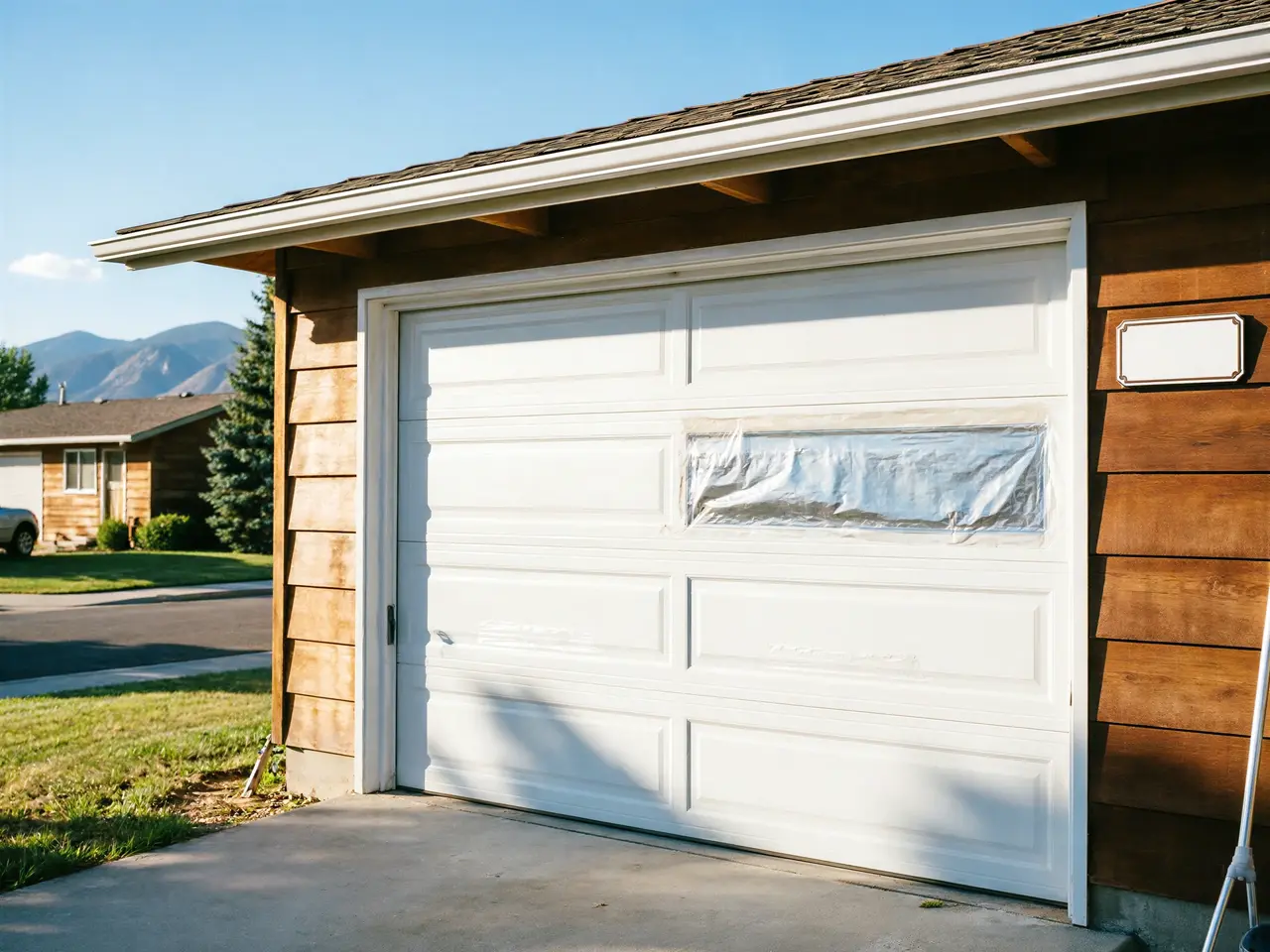
Most houses in Dalton Gardens went up around 1973, which puts the original garage door - if it's still there - at close to fifty years old. Doors from that era were single-layer steel or even wood, hung on extension springs mounted along the horizontal track rather than the torsion springs over the header that are standard now. A lot of those extension systems were installed without the safety cables that became common practice after the early 1990s, which means a broken spring on an old setup can let a cable whip loose instead of staying contained. Openings from that build period also tend to run narrower than what current opener brackets and track hardware are designed around, so a straight swap-in of a modern door sometimes needs bracket or header work most homeowners don't expect going in. If your door has never been replaced, you're not dealing with a worn part - you're dealing with a part that predates half the safety hardware the industry now builds as standard.
What Causes It Around Here
This area sits in a cold climate band with severe winter conditions, and steel garage doors from the early 1970s were rarely built with any real insulation - a single skin of steel over a wood or steel frame, no thermal break. Fifty winters of that panel flexing in the cold, contracting and expanding at the seams, is what eventually cracks old paint, loosens panel hardware, and lets the bottom seal give out. Add in the freeze-thaw cycle that comes with the cold snaps typical here, and any moisture that gets behind an old panel has had five decades to do its slow damage. None of that is unique to one house - it's what happens to any uninsulated steel door built in that window of time, in a climate that swings hard.
How It Shows Up
On a house with original or near-original hardware, the signs usually show up as cold air coming in around the bottom seal even with the door fully down, or a door that feels noticeably heavier to lift in January than it did in July - a sign the steel has flexed enough that it's binding slightly in the track. Some owners notice daylight at the panel seams, which on a door this old usually means the interlocking edges have worn past the point of a tight fit. If the springs are original extension-style, you may also notice the door drops unevenly on one side when it's opened, since those springs stretch and lose tension at different rates over fifty years. None of these are urgent safety issues by themselves, but together they're the profile of a door that's past the point where patching individual parts makes sense.
What the Repair Takes
Installing a new door on a house built around 1973 usually means more than measuring the rough opening and ordering a standard size. We check whether the original header and jamb were built to the narrower clearances common at the time, since modern torsion hardware and opener brackets need a certain amount of room above and beside the opening that 1970s framing doesn't always have. If the existing track is mounted for an old extension-spring layout, that gets removed and replaced with a torsion shaft over the header - a different mounting pattern entirely, not a bolt-in swap. We're honest that this sometimes adds a half-day to what would otherwise be a straightforward install, and on some openings it means minor trim or header reinforcement before the new door goes in. We'll tell you up front if your opening needs that work rather than finding out partway through.
Parts We Carry
For houses in this part of the service area we stock insulated steel sections built for the cold-climate band this region sits in, along with torsion conversion hardware for homes still running the old extension-spring layout. We carry weatherseal track and bottom-seal kits sized for narrower 1970s-era openings, plus the brackets needed to mount a modern opener on framing that predates current clearance standards. We don't stock every custom size or specialty wood-look door on the shelf - those are special order and the lead time runs longer, so if you're set on a particular style it's worth asking before you commit to a timeline.
Frequently asked questions
Is my garage door too old to repair instead of replace?
If your house was built around 1973 and the door hasn't been replaced since, the springs, track, and panel are all past the point where individual repairs hold for long. We'll look at the specific door, but on original hardware this old, full replacement is usually the better value than patching one more part.
Will a new door fit my original opening without extra work?
Sometimes, but not always. Houses from this build era were often framed with narrower header and jamb clearances than modern torsion hardware expects. We check the opening before we quote so you know upfront if bracket or trim work is part of the job.
Do you have a shop in Dalton Gardens?
No - we're based in Post Falls and cover Dalton Gardens from there, about 8 miles out. We bring the install crew and materials with us; there's no local branch to visit.
How does the cold affect a new door here?
This area sits in a severe cold-climate band, so we steer owners toward insulated steel sections rather than the single-layer panels common on 1970s-era doors. Insulation keeps the panel from flexing as much through hard freezes, which is what eventually loosens seams and seals on older doors.
More garage door services in Dalton Gardens
Book garage door service in Post Falls
Call now or request a quote - tell us what the door is doing and where you are.